Priority Infrastructure Plan: A Simple Guide to Smart and Sustainable Growth
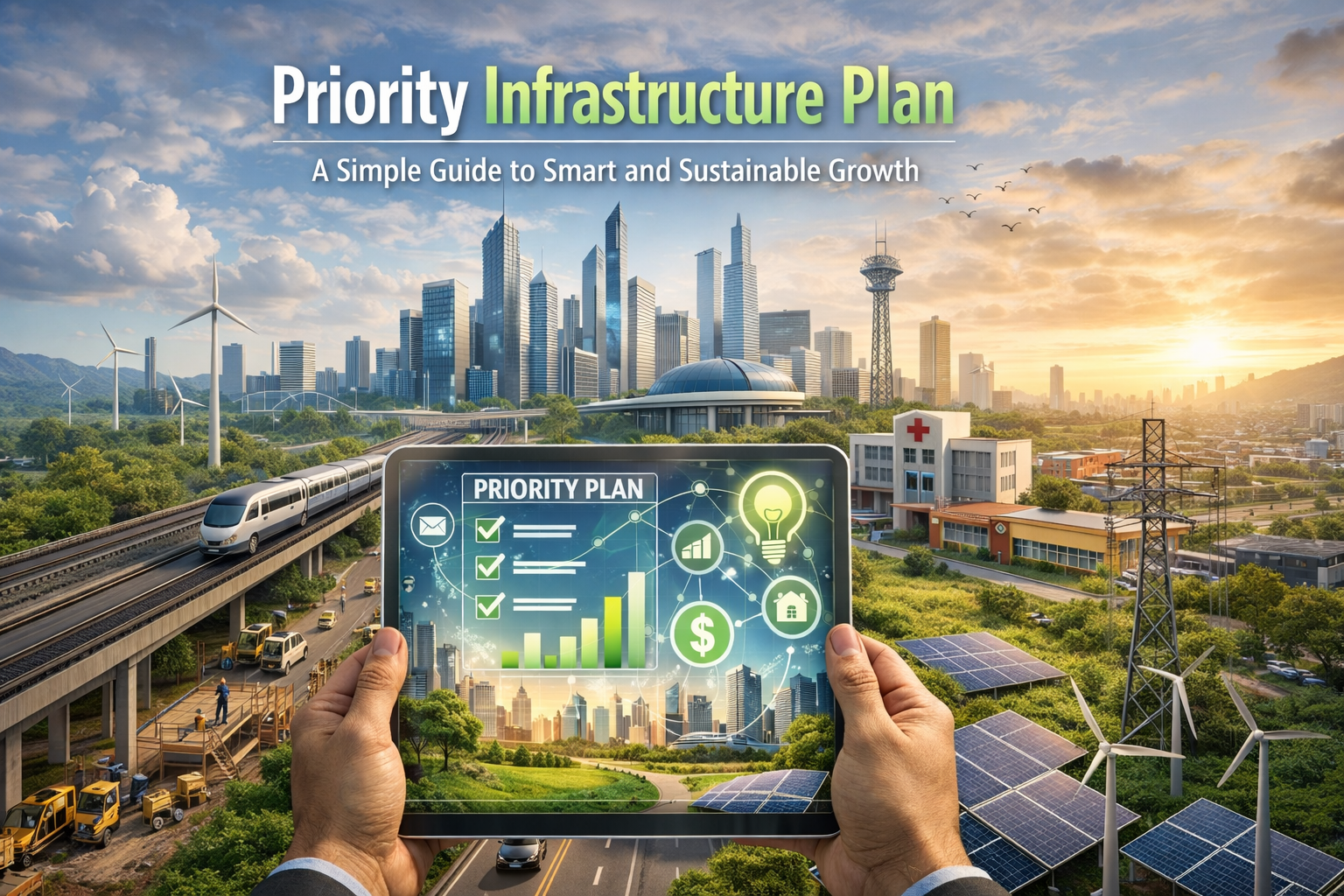
Cities do not grow by chance. Every road, bridge, school, and power system is built through careful planning. One of the most important tools behind this process is a Priority Infrastructure Plan.
It helps governments decide what to build first, where to invest money, and how to support future growth in the best way. Without it, development can become slow, unorganized, and costly.
In this complete guide, you will learn what a Priority Infrastructure Plan is, how it works, and why it plays a key role in building better cities and stronger economies.
What Is a Priority Infrastructure Plan?
A Priority Infrastructure Plan is a structured plan that ranks infrastructure projects based on importance and urgency.
It focuses on projects that bring the most value to people and the economy. Instead of trying to build everything at once, it helps decision-makers choose what should come first.
These projects often include:
- Roads and highways
- Water supply systems
- Electricity networks
- Schools and hospitals
- Internet and communication systems
The main goal is simple. Use limited resources wisely and deliver maximum impact.
Why Priority Infrastructure Planning Matters
Every country and city has limited money, time, and resources. But the demand for better services keeps growing.
A Priority Infrastructure Plan helps manage this challenge by setting clear priorities.
Here is why it matters:
- Saves public money by avoiding waste
- Improves daily life through better services
- Supports economic growth and job creation
- Reduces delays in important projects
Organizations like the World Bank often highlight that strong infrastructure planning is key to long-term development.
When planning is clear, cities grow in a more stable and balanced way.
How It Supports Urban Planning
A Priority Infrastructure Plan is part of the bigger system called Urban Planning.
Urban planning looks at how cities grow and function. It includes land use, housing, transport, and public services.
The Priority Infrastructure Plan works inside this system by answering:
- What should be built first
- Where it should be built
- When it should be completed
This ensures that growth is not random but planned and well-managed.
Key Elements of a Strong Plan
A good plan is not just a list of projects. It is a detailed system with clear steps and goals.
Project Identification
Planners first find gaps in current infrastructure. These are areas where services are missing or not working well.
For example:
- Poor road conditions
- Lack of clean water
- Weak electricity supply
This step helps define real needs.
Project Prioritization
Not every project can be done at the same time. Each project is evaluated based on:
- Public benefit
- Cost
- Urgency
- Long-term value
Projects with the highest impact are selected first.
Funding Strategy
Infrastructure projects need strong financial support. Funding can come from:
- Government budgets
- Loans and grants
- Private investors
Many countries also use Public-Private Partnership to share costs and risks between public and private sectors.
Timeline Planning
Projects are divided into phases such as:
- Short-term goals
- Medium-term plans
- Long-term vision
This helps avoid delays and ensures steady progress.
Monitoring and Control
Once projects start, they must be tracked. Governments monitor progress, costs, and results.
This ensures that projects stay on schedule and deliver expected outcomes.
Types of Infrastructure Included
A Priority Infrastructure Plan covers different sectors that support everyday life.
Transport Infrastructure
This includes roads, railways, and public transport systems. These improve mobility and reduce travel time.
Utility Services
Water supply, sewage systems, and electricity networks fall into this category. These are essential for health and safety.
Social Infrastructure
Schools, hospitals, and community centers improve quality of life and human development.
Digital Infrastructure
Internet and communication systems support modern business, education, and innovation.
Step-by-Step Planning Process
Creating a Priority Infrastructure Plan follows a clear and logical path.
1. Data Collection
Planners gather data about population, economy, and existing systems.
2. Future Forecasting
They estimate future needs based on growth trends and urban expansion.
3. Gap Analysis
They identify where infrastructure is lacking or outdated.
4. Project Evaluation
Each project is studied based on cost, impact, and feasibility.
5. Ranking Priorities
Projects are ranked from most important to least important.
6. Budget Allocation
Funds are assigned to top-priority projects.
7. Implementation
Projects are built step by step based on the plan.
8. Monitoring and Review
Progress is tracked, and adjustments are made when needed.
This process ensures efficiency, transparency, and accountability.
Benefits of a Priority Infrastructure Plan
A well-designed plan delivers real and lasting benefits.
Economic Growth
Infrastructure supports business activity, trade, and job creation. It strengthens the overall economy.
Better Living Standards
People gain access to better roads, healthcare, education, and services.
Organized Development
Cities grow in a structured way instead of becoming overcrowded and chaotic.
Long-Term Sustainability
Modern plans focus on eco-friendly solutions and efficient resource use.
Common Challenges
Even the best plans face difficulties.
Limited Budget
Funds are often not enough to cover all needed projects.
Political Influence
Decisions may sometimes be influenced by politics instead of real need.
Delays in Execution
Large projects can face delays due to legal, technical, or environmental issues.
Coordination Problems
Different departments may struggle to work together smoothly.
Priority Infrastructure Plan vs General Planning
There is a clear difference between the two.
- A Priority Infrastructure Plan focuses only on the most important projects
- General planning includes all projects without ranking
This makes the priority plan more focused, efficient, and results-driven.
Future Trends in Infrastructure Planning
Infrastructure planning is changing with new ideas and technologies.
Smart Cities
Cities are using digital tools to improve services and reduce costs.
Data-Driven Decisions
Big data helps planners make better and faster choices.
Green Infrastructure
There is more focus on renewable energy and eco-friendly systems.
Private Sector Involvement
Governments are working more with private companies to fund and manage projects.
Final Thoughts
A Priority Infrastructure Plan is more than a planning tool. It is a smart way to build the future.
It helps governments focus on what truly matters, use resources wisely, and deliver better services to people.
When done right, it creates cities that are organized, efficient, and ready for future growth.
FAQs
What is a Priority Infrastructure Plan in simple terms?
It is a plan that decides which infrastructure projects should be built first based on importance.
Who creates a Priority Infrastructure Plan?
Government agencies, planners, and infrastructure experts usually create it.
What sectors are included in the plan?
Transport, water, energy, healthcare, education, and digital systems.
How long does the plan last?
Most plans cover 5 to 20 years depending on the region.
Why is it important for cities?
It ensures better services, smart growth, and efficient use of resources.
Explore More:
Irish Whiskey Industry Tariffs: Rising Costs, Trade Pressure, and What It Means for the Future
What Is Matarecycler? A Simple Guide to Smart Recycling
Severna Dakota: Meaning, History, Geography, and Complete Guide
