Severna Dakota: Meaning, History, Geography, and Complete Guide
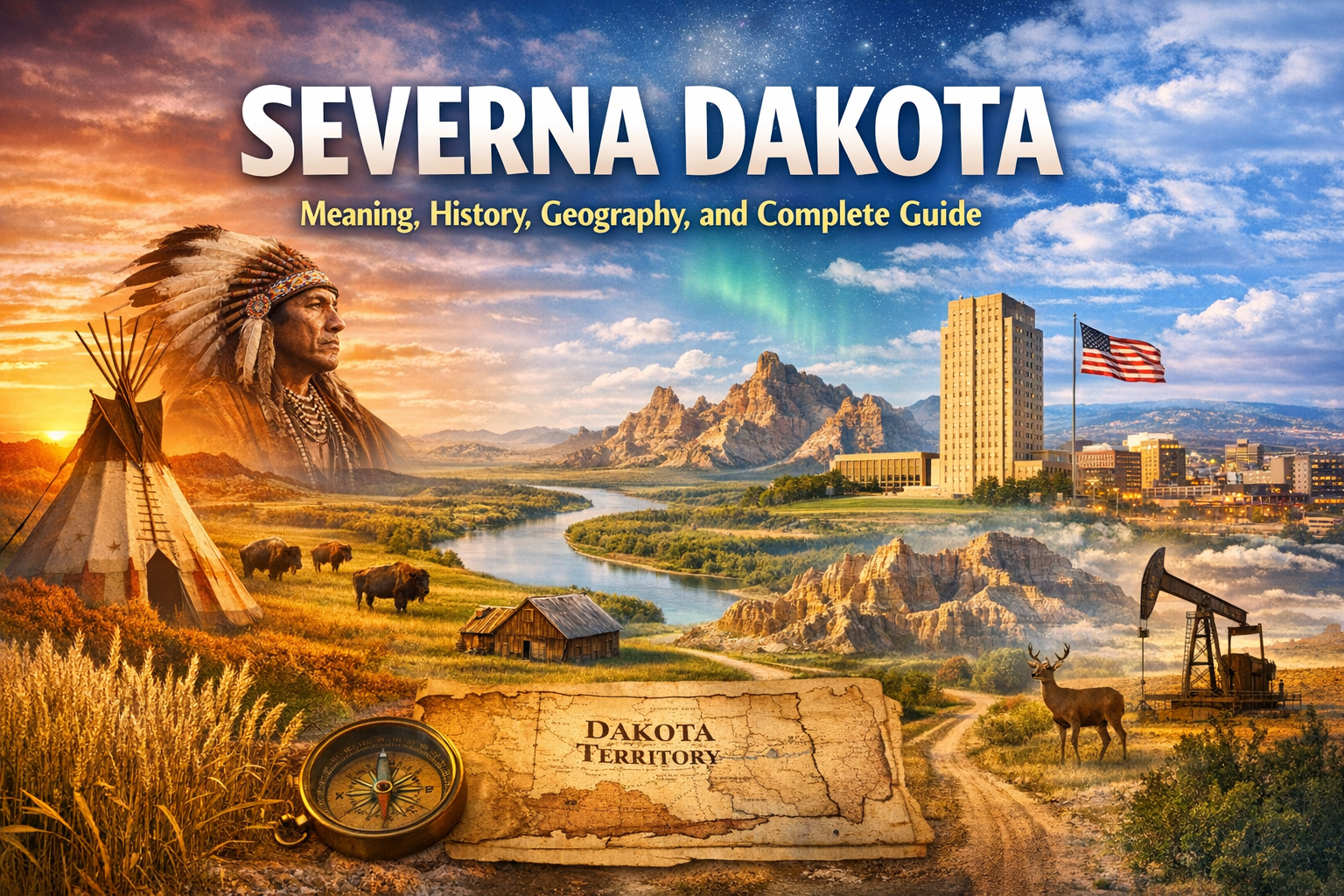
If you have searched for Severna Dakota, you are likely trying to understand what it actually is and whether it is a real place. The name can feel unfamiliar, especially because it does not appear on most English maps. This often creates confusion for readers across different countries.
The truth is simple but meaningful. Severna Dakota is another name for North Dakota, used in some Slavic languages. Once you understand this, the topic becomes much deeper, connecting language, culture, history, and geography in a clear and interesting way.
This article gives you a complete, accurate, and easy explanation of Severna Dakota, covering its meaning, origin, location, history, economy, culture, and lifestyle.
What Is Severna Dakota?
Severna Dakota is the translated version of North Dakota, a state in the United States. It is commonly used in Slavic languages such as Serbian, Croatian, and some Eastern European contexts.
The meaning is very direct and easy to understand. Severna means north, while Dakota remains unchanged, so together they form the meaning North Dakota.
This type of naming is very common across the world. Many languages translate directions like north or south while keeping the original place name. That is why you may see different versions of the same place in global content.
The Meaning Behind the Word Dakota
The word Dakota is not just a geographic label. It carries deep cultural and historical meaning. It comes from the Dakota people, who are part of the larger Sioux nation, one of the most well known Indigenous groups in North America.
The meaning of Dakota is commonly understood as friend or ally. This reflects values like unity, trust, and connection within the community.
When you combine the words, Severna Dakota can be understood as the northern land of the Dakota people. This adds a deeper layer of meaning beyond simple geography.
Where Is Severna Dakota Located?
Since Severna Dakota refers to North Dakota, it is located in the United States, specifically in the Upper Midwest region.
It shares borders with several important areas. To the north is Canada, which connects it internationally. To the east is Minnesota, while South Dakota lies to the south. Montana borders it to the west.
This region is part of the Great Plains, a vast area known for open land, strong winds, and natural beauty. The location plays a key role in shaping the economy, climate, and lifestyle of the region.
Geography and Natural Landscape
The geography of Severna Dakota is simple but powerful. It is defined by wide open spaces and a strong connection to nature.
The land is mostly covered with prairies and farmland, making it one of the most important agricultural regions in the United States. The Missouri River flows through the state and provides water for farming, communities, and wildlife.
Another unique feature is the Badlands, a rugged area with unusual rock formations and striking scenery. These landscapes attract visitors who enjoy quiet and natural environments.
The climate is continental, which means summers are warm while winters can be very cold. This seasonal contrast affects farming, travel, and daily life.
History of Severna Dakota
The history of Severna Dakota is rich and spans thousands of years. It begins long before modern borders were created.
Native American Foundations
Before European settlers arrived, the region was home to several tribes, including the Dakota, Lakota, Mandan, Hidatsa, and Arikara. These groups built strong communities based on farming, hunting, and trade.
They lived near rivers and developed deep cultural traditions that still influence the region today. Their history is an important part of understanding the identity of Severna Dakota.
European Exploration and Trade
In the 1700s, European traders entered the region. Their main goal was the fur trade, which became a major economic activity at the time.
This period brought new goods, new ideas, and new interactions between Indigenous communities and European settlers. It also changed the economic and social structure of the region.
Dakota Territory and Statehood
In 1861, the United States established the Dakota Territory, which included a large portion of the northern plains.
As the population grew, the territory was divided into two states. On November 2, 1889, North Dakota officially became a state, marking the beginning of modern governance and development.
This moment played a key role in shaping the political and economic future of the region.
Economy of Severna Dakota
Severna Dakota has a strong and stable economy that combines traditional industries with modern growth.
Agriculture is the foundation of the economy. The state produces large amounts of wheat, corn, soybeans, and other crops. The fertile land and open space make farming highly productive.
Energy production is another major sector. North Dakota is rich in oil and natural gas, which has helped boost economic growth and create jobs.
In recent years, cities like Fargo have grown in education, healthcare, and technology, showing that the economy is expanding beyond traditional industries.
Major Cities in Severna Dakota
Severna Dakota may have a small population, but it has several important cities that support its economy and culture.
- Fargo is the largest city and a center for business, education, and innovation.
- Bismarck is the capital and plays a central role in government and administration.
- Grand Forks is known for its universities and research institutions.
- Minot supports agriculture and regional trade.
These cities offer a balance between modern living and strong community values.
Culture and Lifestyle
Life in Severna Dakota is calm, simple, and deeply connected to community and nature. People value relationships, traditions, and a balanced way of living.
Native American culture remains an important influence. Events like powwows celebrate music, dance, and heritage, keeping traditions alive across generations.
Outdoor activities are also a major part of life. Many residents enjoy fishing, hunting, hiking, and exploring natural landscapes. The slower pace of life allows people to focus on well being and connection.
Why the Name Severna Dakota Exists
The term Severna Dakota exists because of language translation. Different languages express directions in their own way, so the word north changes depending on the language.
Instead of using the English word north, some languages replace it with their own word, creating names like Severna Dakota.
This is why the term appears in translated articles, global websites, and educational content. It reflects how language shapes the way we understand geography.
Is Severna Dakota Different from North Dakota?
No, there is no difference at all.
Severna Dakota and North Dakota refer to the same place. The only difference is the language used to describe it.
Understanding this helps remove confusion and makes it easier to recognize the term when you see it in international content.
Interesting Facts About Severna Dakota
Severna Dakota has several interesting features that make it unique.
It became a state in 1889, during a time of rapid expansion in the United States.
The name Dakota means friend or ally, showing its deep cultural roots.
It is one of the least densely populated states, which gives it a peaceful and open environment.
The economy is driven by agriculture and energy, making it both traditional and modern.
These facts highlight the importance of the region despite its quiet nature.
Conclusion
Severna Dakota may sound unfamiliar, but it simply refers to North Dakota, expressed in another language. This small difference in wording reflects a larger connection between language, culture, and geography.
By understanding Severna Dakota, you gain a clearer view of Native American heritage, American history, and the natural beauty of the Great Plains. It shows how one place can have multiple names while still holding the same identity.
This knowledge not only removes confusion but also adds depth to your understanding of global geography.
More Articles:
Irish Whiskey Industry Tariffs: Rising Costs, Trade Pressure, and What It Means for the Future
